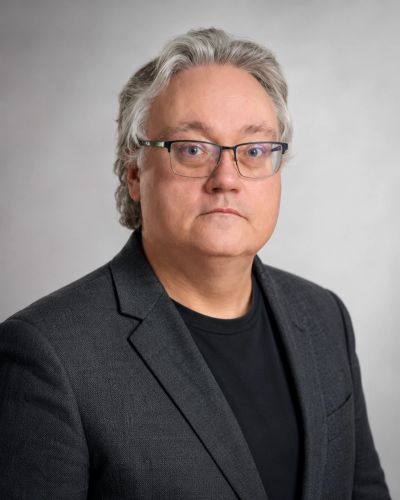
Quantalytics was founded by Dr Mark Everitt to provide independent technical and strategic support in quantum and other emerging technologies.
Mark is a physicist, engineer and systems thinker with more than 25 years of experience in quantum science, technology development, modelling, technical leadership and education. His work has increasingly focused on the difficulties that arise when promising science must be developed into an engineered and useful capability.
These difficulties rarely belong to a single discipline. A technology may demonstrate an important physical effect while its intended application remains poorly defined. Performance may be reported without a common basis for comparison. Programme milestones may be met while significant questions of integration, reliability or evidence remain unresolved. Standards may appear to be a later concern, although early choices about terminology, measurement, interfaces and system boundaries can have long-term consequences.
This led Mark to develop Quantum Systems Engineering as a distinct area of research and professional practice. He founded and led the Quantum Systems Engineering Research Group at Loughborough University and supervised the first doctoral research specifically focused on the subject. The central idea is that quantum technologies should be considered as parts of wider engineered systems, with proper attention given to requirements, measurement, control, environment, interfaces, verification and eventual use.
Mark now works through Quantalytics on technical advisory, standards, programme-review, roadmapping, modelling and training assignments. His recent work has included advice relating to quantum technology capability and integration, quantum standards, international innovation institutes, quantum sensing and the monitoring of publicly funded quantum-technology programmes.
He is Industrial Chair of the Institute for Systems Engineering Quantum Systems Engineering Working Group and participates in UK, European and international quantum standards activities. He has represented the UK in international quantum standardisation and contributes to work on terminology, metrics, benchmarking, quantum sensing, computing and communications.
Before founding Quantalytics, Mark spent much of his career in academia. He led research in quantum systems, superconducting devices, measurement, control and the quantum-to-classical transition, and published more than 80 journal articles and conference papers. He is a co-author of the graduate textbook Quantum Mechanics, published by Wiley.
He also led a substantial reform of the Physics degree at Loughborough University, bringing together mathematical physics, experimentation, computational modelling, systems engineering and professional practice. This experience continues to inform his approach to training and capability development.
Mark is a Fellow of the Institute of Physics, a Chartered Physicist, a member of the Institute for Systems Engineering.